Does Telehealth Really Work for Shift Workers? Here's the Truth About 24/7 Mental Health Access

Welcome to Mindforge Therapy Group, where we understand that your badge, uniform, or scrubs don't come off when your shift ends: and neither do the stresses that come with serving others in life-or-death situations.
If you're a firefighter pulling 24-hour shifts, a police officer working rotating schedules, or a nurse dealing with mandatory overtime, you've probably wondered: "When the hell am I supposed to fit therapy into this schedule?" You're not alone in this frustration. The reality is that traditional mental health services were designed for people who work 9-to-5 Monday through Friday: which describes exactly zero first responders or healthcare workers.
That's where telehealth comes in, promising round-the-clock mental health support that fits your unpredictable schedule. But does it actually work? Let's dig into the real story behind 24/7 mental health access for shift workers.
The Unique Mental Health Challenges Shift Workers Face
First, let's acknowledge what you already know firsthand: your job creates mental health challenges that most people can't even imagine. You witness trauma regularly, make split-second decisions that affect lives, and carry the weight of responsibility that comes with your culture of service.

But beyond the inherent stress of your work, the logistics of getting mental health support present their own obstacles:
Schedule Conflicts: Most therapy offices operate during business hours when you're either working, sleeping off a night shift, or spending precious time with family. Traditional appointment slots at 2 PM on a Tuesday don't work when you're pulling a 48-hour rotation or working four 12-hour shifts in a row.
Geographic Limitations: Many first responders work in rural areas or smaller communities where mental health resources are scarce. Even in larger cities, finding a therapist who understands first responder culture can be challenging.
Stigma and Privacy Concerns: Walking into a therapist's office in your small town where everyone knows you're a cop or paramedic can feel exposing. The fear of being seen seeking help: and what that might mean for your career: keeps many from getting support.
Energy and Emotional Availability: After a particularly brutal shift, the last thing you want to do is drive across town to sit in a waiting room and then try to articulate your feelings to someone who's never worn a badge or run into a burning building.
How Telehealth Promises to Bridge the Gap
Telehealth platforms market themselves as the solution to these problems, and on paper, the benefits are compelling:
True 24/7 Access: Many telehealth services advertise round-the-clock availability, meaning you could theoretically connect with a mental health professional at 3 AM after a traumatic call or during your lunch break on a holiday shift.
Privacy from Your Own Couch: No more worrying about who might see your cruiser in the therapist's parking lot. You can access support from your own home, creating a safer space for vulnerability.
Geographic Freedom: Telehealth opens up access to therapists who specialize in first responder mental health, even if they're located across the state or country.
Flexible Scheduling: Sessions can happen when you're available, not when the office is open.
What the Evidence Actually Shows
Here's where things get interesting. Research on telehealth effectiveness for shift workers specifically is still emerging, but early indicators are promising.
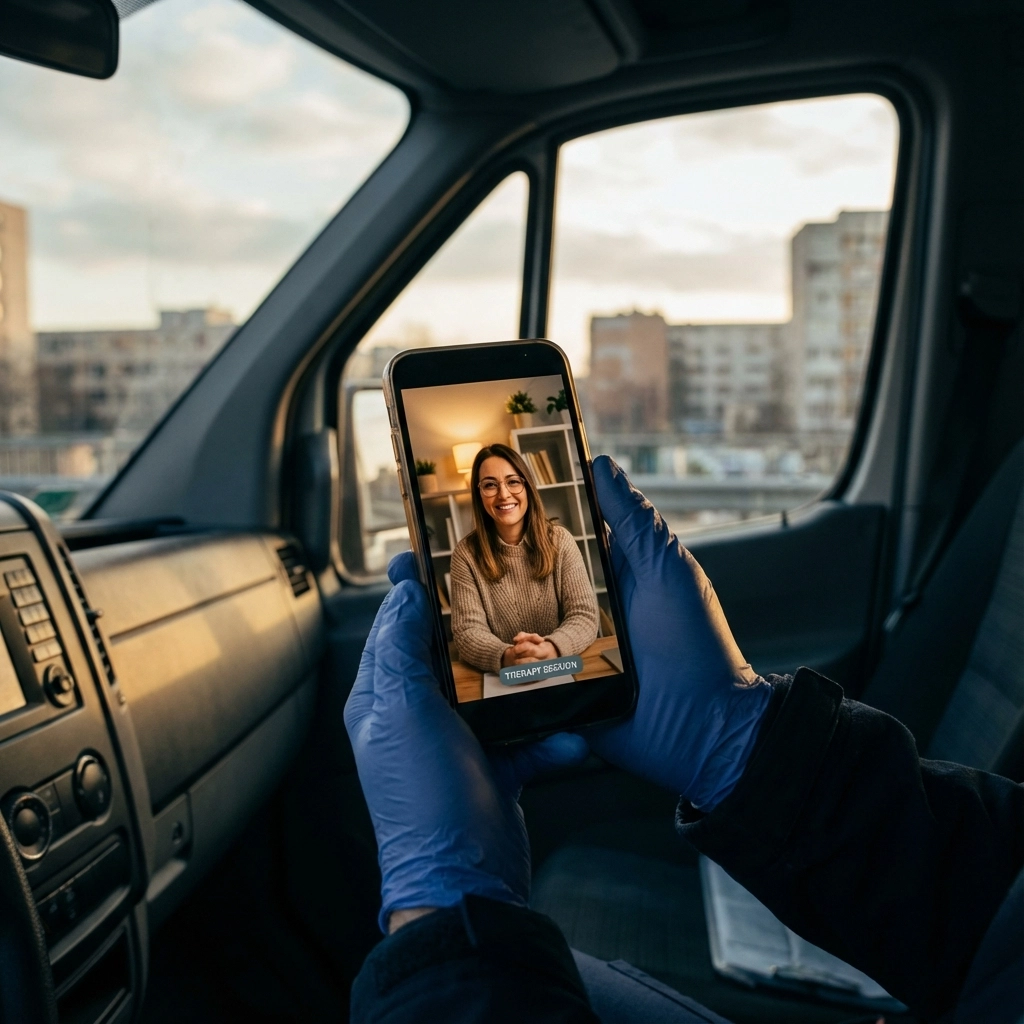
A study conducted at a VA medical center found that employees with work-from-home capabilities during the pandemic reported significantly less stress and burnout while maintaining work efficiency. Over 60% of participants strongly agreed that remote work options increased job satisfaction and their ability to feel safe while reducing overall stress levels.
More specifically for healthcare workers, research shows that 64% of clinicians preferred virtual or hybrid treatment settings, with 58% believing virtual visits would increase for primary care needs. This preference wasn't just about convenience: it was about reducing burnout by avoiding chaotic workplace atmospheres, time-consuming commutes, and other environmental stressors.
The flexibility factor can't be overstated. Telehealth allows shift workers to access mental health support without the additional stress of coordinating schedules, arranging childcare, or fighting traffic after a long shift.
The Realistic Limitations You Need to Know
But let's be honest: telehealth isn't a magic bullet, and it's important to set realistic expectations:
Technology Barriers: Not everyone has reliable internet or feels comfortable with video platforms. If you're already exhausted, troubleshooting tech issues can be the last straw that prevents you from getting help.
Crisis Situations: While many telehealth platforms offer 24/7 access, they may not be equipped to handle acute mental health crises. If you're having thoughts of self-harm or are in immediate danger, traditional emergency services are still your best option.
Relationship Building Takes Time: Some people connect easily over video, while others find it harder to build trust with a therapist they've never met in person. The therapeutic relationship: so crucial for effective treatment: might develop differently in a virtual environment.
Limited Research on True 24/7 Services: While the research on telehealth flexibility is promising, there's still a gap in studies specifically examining how well round-the-clock mental health services work for shift workers long-term.
Real Stories from the Field
One of our clients, a veteran firefighter, shared his experience: "I was skeptical at first. I'm old school: I like to look someone in the eye when I'm talking to them. But after missing three appointments because of calls, I gave telehealth a shot. Being able to talk to someone at 11 PM after the kids were asleep, still in my T-shirt and shorts, made all the difference. I didn't have to 'get ready' for therapy: I could just be myself."
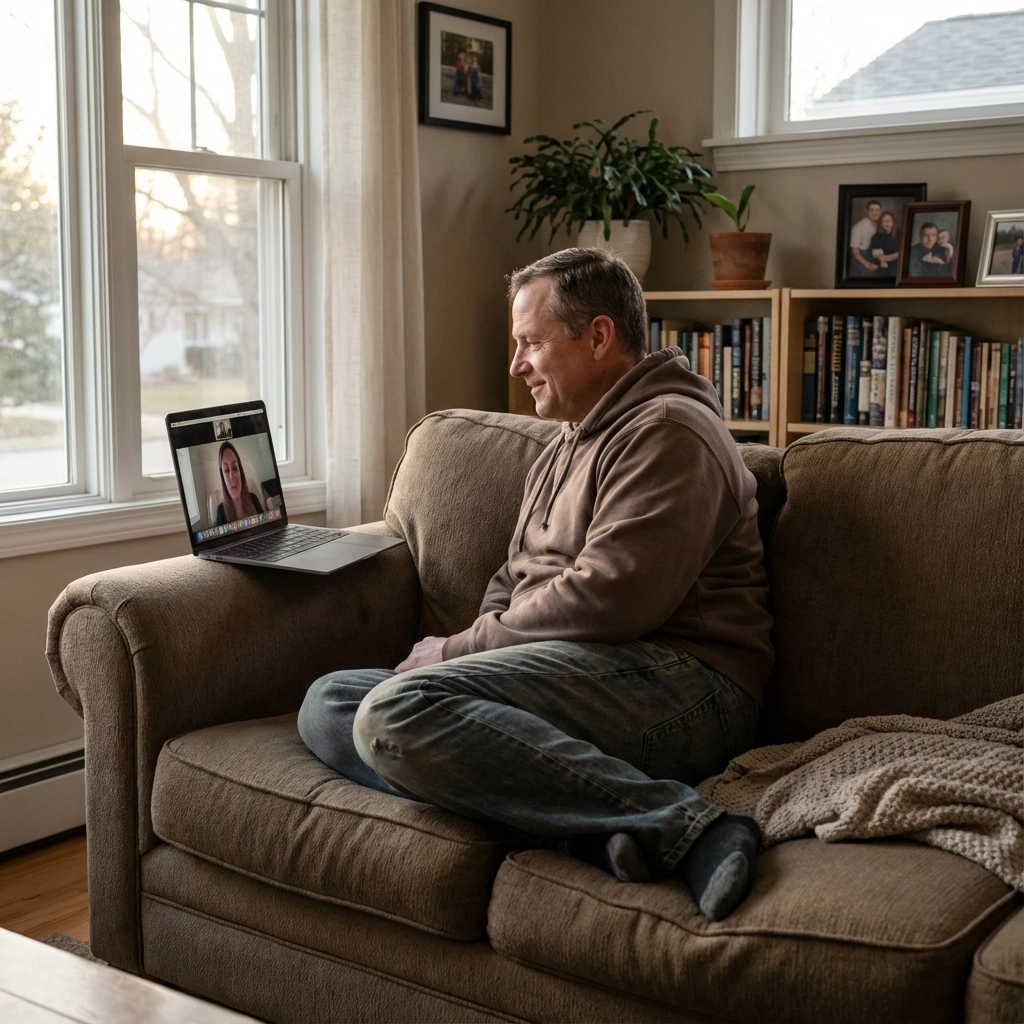
A police officer described it differently: "The anonymity helped at first. I could open up about things I'd been carrying for years without feeling like I was being judged. But eventually, I did want to meet my therapist in person. The good news is that we had built enough trust through our video sessions that when we finally met face-to-face, it felt natural."
How Mindforge Approaches 24/7 Mental Health Access
At Mindforge Therapy Group, we've designed our telehealth services with first responders' unique challenges in mind. We offer flexible scheduling that works around your often unpredictable shifts, and our therapists have firsthand knowledge of first responder culture: many have served in these roles themselves.
We strive to break down barriers by offering sessions that don't feel like traditional therapy. Our approach recognizes that you're strong, capable, and caring individuals who've dedicated your lives to serving others. Sometimes you need support to continue doing that effectively.
We aim to make therapy accessible both logistically and financially. We work with many insurance plans and are willing to work around financial barriers because we believe that access to mental health support shouldn't depend on your ability to pay.
Our platform allows for secure, confidential sessions whenever you need them most. Whether that's after a difficult shift, during a quiet moment between calls, or when you're processing something that happened weeks ago but is suddenly keeping you awake.
The Bottom Line: Does It Really Work?
The honest answer is: it depends on what you need and what you're comfortable with. Telehealth has proven effective for many shift workers because it removes the logistical barriers that often prevent first responders from getting help in the first place.
For routine mental health maintenance: dealing with job stress, relationship issues, or processing difficult calls: telehealth can be incredibly effective and convenient. The flexibility alone makes it more likely that you'll actually attend sessions and stick with treatment.
For more intensive therapy needs or crisis situations, a hybrid approach might work best: using telehealth for regular sessions and in-person support when needed.
Taking the First Step
If you've been putting off getting mental health support because traditional therapy doesn't fit your schedule or lifestyle, telehealth might be worth trying. The barriers are lower, the convenience is higher, and the research suggests it can be just as effective as in-person therapy for many people.
Remember, seeking support isn't a sign of weakness: it's a sign of someone who wants to continue serving others effectively. You can't pour from an empty cup, and taking care of your mental health ensures you can continue answering the call when others need you most.
Ready to see if telehealth works for you? Visit our booking page to schedule a consultation at a time that works with your schedule: even if that's 2 AM after a rough shift. We're here when you need us, on your terms.
Comments